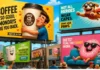


A few words can carry a lot of brand weight. The challenge isn’t making a line sound clever. It’s making it clear, memorable, and believable. Studying effective brand messaging helps you spot patterns that people can quickly understand and recall.
Strong slogan examples share four traits: they are short, specific, easy to say, and tied to one clear promise or feeling. The best line doesn’t explain the whole business. It gives people one idea to remember, then supports that idea through the product, service, or campaign.
| Key point | What to remember |
| Main purpose | Give people one memorable idea about a brand, product, or campaign |
| Strong qualities | Clear, short, distinctive, and easy to repeat |
| Common approaches | Benefit, emotion, action, identity, proof, or wordplay |
| Useful length | Often a few words, but clarity matters more than a fixed word count |
| Main mistake | Trying to explain every feature in one phrase |
| Final test | Does the line sound natural, fit the brand, and hold up in real marketing? |
Key Takeaways
- Memorable lines usually communicate one idea rather than several.
- Famous phrases are useful as pattern studies, not as wording to copy.
- A clear benefit can be stronger than clever wordplay.
- Rhythm, contrast, repetition, and direct commands can improve recall.
- Your final choice should work across ads, websites, packaging, and social posts.
- A strong promise must match what the business can deliver.
What Makes a Memorable Brand Line Work?
A brand slogan is a short phrase that communicates an idea people can connect with a company, product, or campaign. Strong slogans usually rely on clarity, memorability, brand fit, and a focused message.
Short wording helps, but word count alone doesn’t create memorability. A two-word phrase can feel empty, while a longer line can work when its rhythm makes it easy to repeat.
The stronger test is simple: What does the reader remember after the brand name disappears?
Good lines tend to do one main job:
- State a benefit.
- Trigger a feeling.
- Invite action.
- Express an identity.
- Make a product difference easier to remember.
That focus also matters in paid campaigns. AdsS Paper’s guide to digital advertising services explains how brands can appear across search, social, display, video, and other channels. A short brand message needs enough flexibility to work across those different placements.
35 Slogan Examples and the Patterns Behind Them
Famous brand lines are useful because each one reveals a repeatable writing technique. The goal isn’t to copy the words. Study the structure, then apply the principle to your own promise.
15 Famous Brand Lines Worth Studying
| Brand | Brand line | Lesson |
| Glossier | “Skin first. Makeup second.” | Uses contrast to express a product philosophy |
| Allbirds | “Mother Nature made us do it.” | Connects the brand with an environmental idea |
| De Beers | “A diamond is forever.” | Links a product with a lasting emotion |
| Dollar Shave Club | “Shave time. Shave money.” | Uses wordplay while stating value |
| Dunkin’ | “America runs on Dunkin’.” | Connects the product with a daily habit |
| Maybelline | “Maybe she’s born with it. Maybe it’s Maybelline.” | Uses repetition to create rhythm |
| KFC | “Finger Lickin’ Good.” | Ties the product to a sensory reaction |
| Subway | “Eat Fresh.” | Makes a short positioning claim |
| Nike | “Just Do It.” | Uses a direct command |
| Skittles | “Taste the Rainbow.” | Turns the product into a visual idea |
| Target | “Expect More. Pay Less.” | Pairs two customer benefits |
| M&M’s | “Melts in Your Mouth, Not in Your Hands.” | States a product difference |
| Allstate | “You’re in Good Hands.” | Builds reassurance |
| Apple | “Think Different.” | Expresses identity and attitude |
| Papa John’s | “Better Ingredients. Better Pizza.” | Uses repetition to connect cause and result |
20 Original Ideas by Business Type
The next examples are original ideas for inspiration. They show how the same writing patterns can fit different industries.
| Business type | Example | Main technique |
| Bakery | Fresh starts here. | Warm association |
| Consulting | Clear decisions. Better moves. | Benefit |
| Cleaning service | Come home to clean. | Outcome |
| SaaS company | Less admin. More progress. | Contrast |
| Coffee shop | Start strong. | Action |
| Real estate | Find your next chapter. | Emotion |
| Fitness studio | Stronger every week. | Progress |
| Pet care | Care they can feel. | Emotion |
| Accounting | Numbers without the noise. | Simplicity |
| Landscaping | Better yards, easier weekends. | Lifestyle benefit |
| Delivery company | From here to there, faster. | Speed |
| Education | Learn it. Use it. | Action |
| Travel company | Go farther, feel closer. | Contrast |
| Skincare | Simple care, daily confidence. | Benefit |
| Cybersecurity | Quiet protection, always on. | Reassurance |
| Restaurant | Good food, no fuss. | Simplicity |
| Home repair | Fixed right. Back to normal. | Outcome |
| Design studio | Ideas made visible. | Transformation |
| Financial planning | Know where your money goes. | Clarity |
| Local retailer | Worth the stop. | Curiosity |
Notice that these lines don’t explain every service. Each focuses on a single idea.
That discipline matters throughout marketing. AdsS Paper’s guide to connecting marketing touchpoints with sales explains why customers often encounter a business across several interactions. Repeating one clear idea can make those separate encounters feel more connected.
Six Patterns You Can Borrow Without Copying

1. Lead With the Customer Benefit
“Better yards, easier weekends” works because the yard isn’t the final benefit. Free time is.
Ask what changes for the customer after they buy. That answer often gives you stronger material than a product feature.
2. Use Contrast
Pairing two ideas creates rhythm and tension.
“Less admin. More progress.” has a clear before-and-after structure. The reader understands the trade-off immediately.
3. Give a Direct Command
Commands work when action fits the brand’s personality.
“Start strong” suits coffee or fitness. A financial adviser may need a calmer tone. Match the language to the level of trust your category requires.
4. Connect With an Emotion
People may forget product details while remembering how a message made them feel.
Reassurance works for insurance. Confidence fits beauty. Belonging can suit travel or community brands. Pick an emotion your customer already wants to experience.
5. Use Rhythm and Repetition
Repeated structures make phrases easier to say.
“Learn it. Use it.” is simple because both parts have the same structure. Read your drafts aloud. Awkward wording becomes easier to spot when you hear it.
6. Make a Promise You Can Prove
A memorable phrase creates an expectation. The rest of the customer experience has to support it.
Proof can come from product performance, service, customer feedback, demonstrations, or case studies. AdsS Paper’s guide to testimonial videos explains how real customer experiences can support marketing claims with credible stories.
Slogan vs. Tagline: What’s the Difference?
A slogan often supports a campaign, product, or temporary marketing message. A tagline usually expresses the broader brand identity and may remain in use for years.
In practice, marketers often use the terms interchangeably. The distinction still helps when deciding how long the phrase needs to remain relevant.
A campaign line can respond to a launch, season, or promotion. An evergreen tagline needs to make sense even as products and campaigns change.
How to Write Your Own Brand Line
Don’t expect the first draft to be the final one. Strong messaging usually comes from narrowing down many options.
- Choose one audience. Write down who needs to remember the message.
- Define one promise. Decide what you want that audience to associate with the business.
- Choose the tone. Pick words such as friendly, premium, practical, bold, or reassuring.
- Draft at least 20 options. Try commands, benefits, contrasts, questions, and rhythmic phrases.
- Cut unnecessary words. Remove anything that doesn’t improve meaning or rhythm.
- Test the finalists. Read them aloud and place them beside the brand name.
Don’t evaluate the phrase alone on a blank page. Put it in the places where customers will actually encounter it.
Try it on:
- A homepage header
- A search or social ad
- Product packaging
- An email subject line or banner
- A social profile
- A printed sign
Customer response matters more than internal preference. AdsS Paper’s article on AI technologies for customer engagement also explains how marketers can use customer data, testing, and feedback to improve interactions.
A Simple Five-Point Test Before You Choose
Score each finalist from one to five based on these questions.
| Test | Question |
| Clarity | Can someone understand it on the first read? |
| Memory | Can they repeat the main idea later? |
| Relevance | Does it connect with what the business sells or promises? |
| Distinction | Could a direct competitor use the exact same wording? |
| Proof | Can the customer experience support the claim? |
A phrase with perfect rhythm but weak relevance isn’t ready. The same applies to a clever line that competitors could use without changing a word.
Try the strongest two or three options with people who match your target audience. Ask what each phrase makes them expect from the business. Their answers will reveal whether your intended message is coming through.
Common Mistakes to Avoid
The first mistake is trying to say too much. Mission, features, audience, values, quality, and price rarely fit into one short phrase.
Another mistake is choosing empty praise. Words such as “quality,” “excellence,” and “solutions” need context. They are easy for competitors to claim.
Don’t copy a famous structure so closely that readers think of another company first. Inspiration should help you identify a technique, not borrow someone else’s identity.
Finally, avoid making a promise the business can’t support. A catchy phrase may win attention once, but a consistent customer experience is what gives the message lasting value.
Turn the Pattern Into Your Own Message
Famous lines are useful because they reveal the mechanics behind memorable branding. They show how much work a few carefully chosen words can do.
Start with your audience and one promise. Write more options than you think you need. Then test the finalists where customers will see them.
The goal isn’t to sound like a famous brand. It’s to create a short line that sounds unmistakably like yours.
Frequently Asked Questions
A good slogan communicates a clear idea, sounds natural when spoken, and fits the brand’s real promise. Brevity helps, but clarity matters more than hitting a fixed word count.
Start with one customer benefit or emotion. Draft several short versions, then test their rhythm by reading them aloud. Remove vague words and keep the version people understand most quickly.
No. A business can operate without one. A memorable phrase becomes useful when you need a concise message that reinforces your positioning across ads, packaging, websites, and campaigns.
There is no universal limit. Many famous lines use only a few words because shorter phrases are easier to repeat. Keep every word that adds meaning and remove the rest.
Study the technique rather than the wording. Identify whether the line uses contrast, emotion, a command, a benefit, or repetition. Then apply that structure to a promise that belongs specifically to your business.