

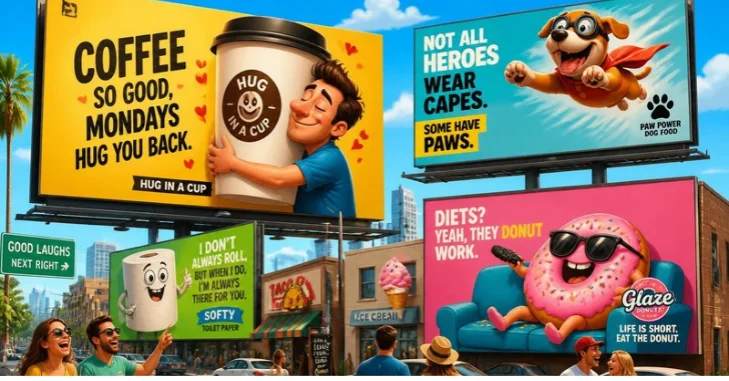
Funny ads can turn an ordinary sales message into something people remember and repeat. The strongest examples do more than deliver a punchline. They connect the joke directly to the product, customer problem, or brand personality.
Humor also gives advertisers a way to earn attention instead of demanding it. A clever commercial may get shared because people enjoy it, not because they were asked. Yet a memorable joke only helps when viewers also remember the advertiser.
Funny Ads at a Glance
| Campaign | Brand | Main Humor Style | Marketing Lesson |
| The Man Your Man Could Smell Like | Old Spice | Absurdity | Make the product part of the joke |
| You’re Not You When You’re Hungry | Snickers | Relatable exaggeration | Build humor around a product truth |
| Our Blades Are F*ing Great | Dollar Shave Club | Deadpan humor | Personality can separate a new brand |
| Hump Day | GEICO | Absurd character | Repetition can build recognition |
| Whassup? | Budweiser | Everyday comedy | Simple ideas can become social language |
| Where’s the Beef? | Wendy’s | Catchphrase humor | A joke can communicate a product claim |
| The Force | Volkswagen | Situational humor | Storytelling can carry the joke |
| Betty White | Snickers | Unexpected casting | Surprise strengthens a familiar idea |
| Alexa Loses Her Voice | Amazon | Celebrity comedy | Product functions can drive the story |
| Doritos Super Bowl Ads | Doritos | Absurdity | Audience participation extends campaigns |
| Mayhem | Allstate | Character comedy | Turn customer problems into a character |
| Old Spice Follow-Ups | Old Spice | Surreal escalation | A repeatable format can outlive one ad |
Direct answer: Funny ads work when humor attracts attention while reinforcing something useful about the brand. Strong campaigns connect the joke to a product benefit, customer problem, or recognizable personality. The audience should remember both the funny moment and who paid for it. Otherwise, the entertainment can overshadow the marketing message.
Why Funny Advertising Gets Attention
American consumers encounter funny ads across television, streaming platforms, social feeds, search results, websites, and outdoor media. That creates heavy competition for even a few seconds of attention. Humor can interrupt familiar advertising patterns and give someone a reason to keep watching.
The joke still needs a marketing job. Comedy can highlight a frustrating customer problem, exaggerate a product benefit, or establish a distinctive personality. AdsS Paper’s coverage of popular advertising campaigns shows that memorable campaigns usually combine clear ideas, emotion, branding, and shareability.
Humor can also encourage voluntary distribution. People rarely send friends a routine product announcement. They may share a commercial that genuinely makes them laugh.
12 Funny Ads and Campaigns Worth Studying
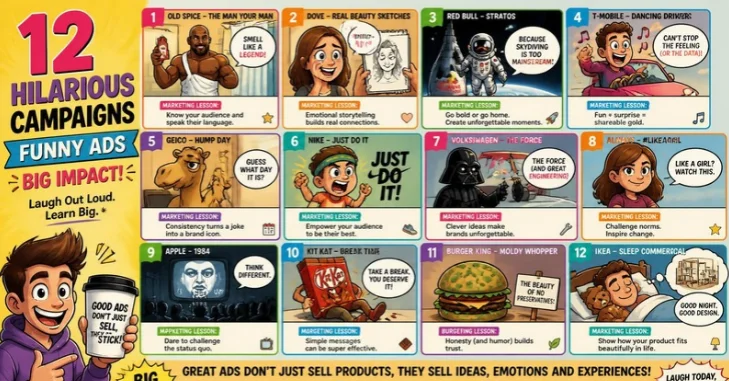
1. Old Spice: The Man Your Man Could Smell Like
Old Spice created a surreal commercial built around an extremely confident spokesperson and rapid scene changes. The performance becomes increasingly ridiculous while the product remains central. Viewers get an entertaining character without losing sight of what the brand sells.
The campaign demonstrates how exaggeration can refresh a familiar product category. Its humor also created a recognizable voice that carried into later content. Marketers can borrow that principle without copying the character or script.
2. Snickers: You’re Not You When You’re Hungry
Snickers built its long-running idea on a simple observation: hunger changes people’s behavior. The advertisements exaggerate that feeling by replacing ordinary people with unexpected personalities. Eating a Snickers restores the person and completes the joke.
That structure makes the product essential to the punchline. Remove the candy bar, and the story no longer works properly. This connection between comedy and product benefit is one reason the campaign remains useful for marketers to study.
3. Dollar Shave Club: Our Blades Are F*ing Great
Dollar Shave Club introduced itself with a founder-led video that rejected the polished style of traditional razor advertising. Michael Dubin walks through a warehouse while delivering jokes and explaining the subscription offer. The humor supports a clear message about uncomplicated razors and straightforward pricing.
The campaign also showed that funny advertising does not require movie-scale production. A distinctive script and confident delivery can carry a simple concept. Small U.S. businesses can apply that lesson without attempting to imitate the original video.
4. GEICO: Hump Day
GEICO’s talking camel wandering through an office made an ordinary Wednesday unexpectedly entertaining. The setup is easy to understand, and the repeated question drives the joke. The character also fits GEICO’s history of using unusual personalities in advertising.
This approach shows the value of recognizable recurring devices. Brands do not need to explain a complicated joke every time. Familiar characters and structures can make new creative work easier for audiences to recognize.
5. Budweiser: Whassup?
Budweiser turned a casual greeting between friends into one of advertising’s most recognizable catchphrases. The humor came from repetition, exaggeration, and the ordinary social situation surrounding the product. People could easily imitate the idea themselves.
That repeatability helped the concept travel outside its original commercial. A strong campaign sometimes gives the audience something simple to quote or recreate. The brand connection must remain clear as that phrase spreads.
6. Wendy’s: Where’s the Beef?
Wendy’s used a short comedic question to challenge the size of competitors’ hamburger patties. The line was funny, memorable, and tied directly to a product comparison. That gave the joke a commercial purpose beyond entertainment.
The lesson is especially useful for brands with a clear competitive difference. A humorous line can communicate that distinction faster than a lengthy explanation. Claims still need to remain accurate and supportable.
7. Volkswagen: The Force
Volkswagen’s Super Bowl commercial featured a child dressed as Darth Vader trying unsuccessfully to use the Force. A parent secretly starts the car, making the child believe the attempt finally worked. The humor comes from the family’s reaction and the child’s sincere surprise.
The commercial illustrates how gentle humor can work without rapid jokes or outrageous dialogue. Story structure creates the entertainment instead. This approach can suit brands that want warmth alongside comedy.
8. Snickers Featuring Betty White
Snickers used Betty White in a football game to dramatize its established hunger concept. The unexpected casting created the initial surprise. The transformation back to the regular player then reinforced the campaign’s central product idea.
Celebrity involvement worked because it served the concept rather than replacing it. A famous face alone does not create an effective advertisement. The person needs a clear role within the story and brand message.
9. Amazon: Alexa Loses Her Voice
Amazon imagined Alexa losing her voice and being replaced by famous personalities. Each replacement interprets requests in an exaggerated and unhelpful way. The comedy depends on viewers already understanding what Alexa normally does.
This format turns product functionality into the foundation of the joke. Viewers learn or remember the normal service while watching it malfunction in entertaining ways. Product demonstrations can become stories instead of feature lists.
10. Doritos and Its Super Bowl Humor
Doritos became associated with unusual Super Bowl commercials and audience-created concepts. Many spots used exaggerated situations, physical comedy, or unexpected behavior around the snack. The product often remained visually prominent during the joke.
Audience participation added another dimension to the advertising. Instead of treating viewers only as recipients, campaigns could invite them into the creative process. Social platforms now make that participation easier for brands outside major television events.
11. Allstate: Mayhem
Allstate personified everyday risks through its Mayhem character. He represents problems such as accidents, distractions, and unexpected damage. Turning those risks into a character makes insurance scenarios easier to dramatize.
The concept works because the comedy connects naturally with the service. Insurance exists partly because unpredictable problems happen. Mayhem converts that serious customer concern into an entertaining recurring format.
12. Old Spice’s Expanding Surreal Universe
Old Spice continued beyond one successful commercial by expanding its exaggerated tone into more characters and situations. That consistency made the humor recognizable even when individual jokes changed. The campaign became a creative system rather than one isolated hit.
Brands can learn an important lesson from that approach. Finding one successful joke is useful, but finding a repeatable comedic structure is more valuable. Consistency can turn individual advertisements into recognizable brand assets.
What the Best Funny Ads Have in Common
Successful comedy campaigns often look different on the surface. One may use celebrities, while another depends on an animal, awkward conversation, or visual surprise. Underneath those differences, several useful patterns appear.
- The joke is easy to understand.
- The brand remains visible or important.
- The product has a role in the story.
- The humor suits the intended audience.
- The concept can work in its chosen advertising channel.
- The creative idea supports a clear marketing objective.
These principles matter because attention alone is not enough. AdsS Paper’s guide to direct response marketing explains why campaigns also need a defined action when the objective is response. Entertainment should support the business goal, not compete with it.
Humor Styles Brands Can Use
Different products call for different types of comedy. Absurdity can suit a playful consumer brand, while understated humor may work better for professional audiences. Self-deprecation can also make a company feel more approachable when the joke is credible.
| Humor style | How it works | Main risk |
| Absurdity | Creates an impossible or strange situation | Product becomes secondary |
| Exaggeration | Pushes a real problem to ridiculous extremes | Claim becomes confusing |
| Deadpan | Delivers ridiculous ideas seriously | Tone may be missed |
| Self-deprecation | Lets the brand joke about itself | Can weaken trust |
| Situational humor | Builds comedy around familiar experiences | May feel generic |
| Character humor | Uses a recurring comic personality | Character overshadows brand |
Audience fit should guide the choice. A joke that succeeds with college students may fail with business buyers. U.S. advertisers should also consider regional, cultural, generational, and platform differences before scaling a campaign.
How to Create a Funny Ad Without Losing the Message
Start with the customer problem rather than the joke. Write one sentence describing what the audience should remember about the product. Use that sentence as a filter for every comedic idea you consider.
Next, generate several concepts instead of becoming attached to the first one. A useful creative brief can define the audience, objective, message, channel, and boundaries before production begins. This keeps the team focused when brainstorming becomes playful.
Then test whether the brand survives without explanation. Show the concept to someone who was not involved in creating it. Ask what company they remember, what was being sold, and what action they think should follow.
Finally, measure the business response alongside entertainment metrics. Shares and comments can indicate interest, but they do not automatically prove sales impact. Track outcomes that match the campaign goal, such as clicks, leads, purchases, searches, or brand recall.
When Humor Can Hurt an Advertisement
Comedy becomes risky when the joke targets vulnerable people or depends on stereotypes. It can also fail when cultural context changes the meaning. Brands should review potentially sensitive creative work with people outside the original team.
Another common problem is making the joke more memorable than the advertiser. Viewers may describe a hilarious commercial perfectly while forgetting the company behind it. Strong brand cues, product involvement, and consistent creative devices reduce that risk.
Timing also matters. A joke can feel inappropriate beside serious news or sensitive events. Digital campaigns need monitoring because placements and conversations can change quickly.
Turning Humor Into a U.S. Social Advertising Strategy
Social platforms give advertisers more opportunities to test comedy than traditional television did. Brands can experiment with short videos, reaction formats, recurring characters, memes, and audience replies. Smaller tests can reveal which ideas deserve larger budgets.
The channel should influence the creative execution. AdsS Paper’s social media marketing strategy recommends connecting content and promotion to defined business goals. A humorous post should follow the same rule.
Marketers should also adapt ideas instead of posting identical creative everywhere. A six-second video needs a different rhythm from a longer YouTube commercial. Static ads need the visual joke to become clear almost immediately.
Make the Laugh Lead Somewhere
The most useful lesson from famous comedy campaigns is simple: the joke should strengthen the reason to remember the brand. Old Spice, Snickers, GEICO, and other recognizable campaigns use different styles, yet their comedy supports a repeatable idea. That connection gives the entertainment marketing value.
Before launching your next campaign, define the audience, product truth, and desired action first. Then find the humorous angle that makes those points easier to remember. Measure what happens after the laugh, because attention becomes valuable when it leads to recognition or action.
Frequently Asked Questions About Funny Ads
What are funny ads?
Funny ads use comedy to attract attention and communicate a marketing message. They can use absurdity, exaggeration, characters, wordplay, or relatable situations. Effective examples keep the advertiser connected to the joke.
Why do brands use funny ads?
Brands use humor to attract attention and make advertising more enjoyable. Comedy can also give people a reason to remember or share a campaign. The marketing message still needs to remain clear.
What makes a funny advertisement effective?
An effective humorous advertisement combines a clear joke with strong brand recognition. The product should play a meaningful role whenever possible. The humor should also match the intended audience and channel.
Can humor increase sales?
Humor can support sales when it strengthens attention and communicates a persuasive product message. A laugh by itself does not guarantee a purchase. Advertisers should measure conversions or other business outcomes alongside engagement.
Are humorous advertisements risky?
Yes, because humor is subjective and context matters. A joke can confuse, offend, or distract from the product. Testing creative ideas with representative audience members can reduce those risks.
How can a small business create funny advertising?
Small businesses can begin with familiar customer frustrations and simple situations. For many social formats, strong writing matters more than expensive production. Test several concepts before putting significant advertising spend behind one idea.